OCAS
Overview
The Cross-Border Road Transport Agency (C-BRTA) developed the Operator Compliance Accreditation System (OCAS), which is a risk-based system that will be used to implement quality regulation through certification and accreditation of cross-border road transport operators.
How it works
OCAS is designed for operators in the cross-border road transport industry. Furthermore, OCAS aims to ensure that operators in the cross-border road transport industry comply with all necessary regulations and standards, thereby facilitating smoother and more efficient trade flows.
Why you should register
OCAS seeks to ensure that operators experience minimal delays along the road and at ports of entry. The programme focuses on facilitating efficient cross-border road transport movements and legitimate trade between South Africa and neighbouring countries.
What does it mean to be accredited?
Accredited operators will enjoy the benefits of moving goods across borders with ease and efficiency.
Successfully accredited operators will be awarded recognition status depending on their level of compliance.
Accredited operators will enjoy the following benefits:
- Reduction in transit time, delays and downtime due to enforcement actions;
- Seamless cross-border road transport operations;
- Increased supply chain visibility and security;
- Economic benefits and improved productivity to traders and transport operators;
- Clients receiving immediate support and assistance;
- Prioritised Departmental administrative processing;
- Positive International business ratings due to reductions in cost of business (COB);
- Improved border and corridor efficiency; and
- Increased Trade competitiveness.
Levels of accreditation
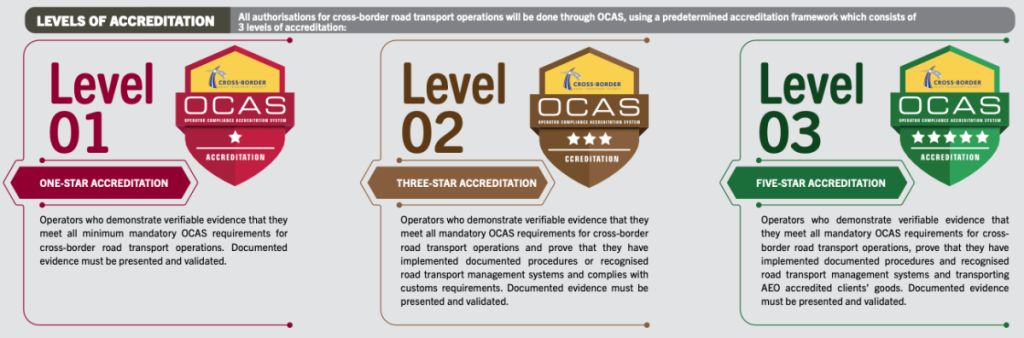
All authorisations for cross-border road transport operations will be done through OCAS, using a predetermined accreditation framework which consists of
3 levels of accreditation:
Level 01
One-star accreditation
Operators who demonstrate verifiable evidence that they meet all minimum mandatory OCAS requirements for cross-border road transport operations. Documented evidence must be presented and validated.
Level 02
Three-star accreditation
Operators who demonstrate verifiable evidence that they meet all mandatory OCAS requirements for cross-border road transport operations and prove that they have implemented documented procedures or recognised road transport management systems and complies with customs requirements. Documented evidence must be presented and validated.
Level 03
Five-star accredication
Operators who demonstrate verifiable evidence that they meet all mandatory OCAS requirements for cross-border road transport operations, prove that they have implemented documented procedures and recognised road transport management systems and transporting AEO accredited clients’ goods. Documented evidence must be presented and validated.
How to Register
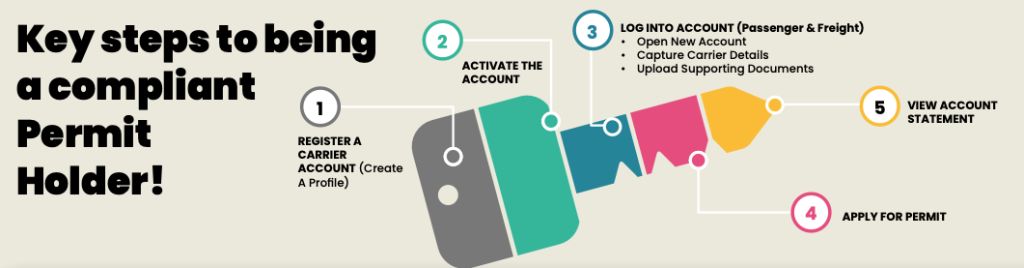
To participate in the OCAS in the cross-border road transport industry, operators need to follow a series of steps:
- Operator Registration: Operators need to register with the Agency and the registration process involves providing necessary details about the operator and the business. The following are some of the components of the operator registration:
- Applicant: An applicant refers to a person, organization, or representative applying for accreditation under the OCAS.
- Vehicle registration is essential for all vehicles used in transportation, including trucks, buses, and specialized vehicles.
- Competent responsible persons are individuals appointed to oversee specific aspects of transportation or depot operations.
- Depots (storage facilities for goods, fuel, or vehicles) must also be registered. The process involves obtaining necessary permits, adhering to safety regulations, and ensuring compliance with environmental norms. - Profiling and Risk Management: This component of OCAS involves assessing the risk profile of operators and implementing appropriate risk management strategies.
- Accreditation and Certification: OCAS involves a formal process of recognition. Operators are accredited and certified based on their compliance with the standards set by OCAS. When an operator/carrier complies with the system’s standards, they receive accreditation. This accreditation is going to be used for certification of cross-border road transport operators; and
- Auditing & Compliance Monitoring: Regular audits and monitoring are conducted to ensure ongoing compliance.